




As I navigate through my last few days of senior year, I find myself frequently reflecting on how I got here. Yet, every memory I have is tainted by the “last”. The last first day of school, the last pep rally, the last day of gym. I wasn’t going to have another month of Halloween pictures in this school, or another look around the little kids parading around my neighborhood all dressed up as the things they wanted to be when they grew older. Even before I stepped foot in this school as a senior, I was acutely aware of how each day in this year was so monumental.
Every day was designed to create nostalgia. The first day this year was compared to the twelve first days before it, with a particular phrase lingering in my mind:
“Things were so much better back then.”
This should sound familiar, whether better means more fun, less stressful, more happy, or any alternative equivalent; that thought is something everyone experiences at some point in their lives, and senior year especially is a hotspot for it. Except, is it really nostalgia we experience on these last days, if we were told in advance to be nostalgic? If we are being told that this will be our last homecoming, our last everything, then are we truly experiencing those “lasts” as we would without the knowledge of that nostalgia?
If we know we will be nostalgic, then are we documenting a performance of our life rather than an experience of it?
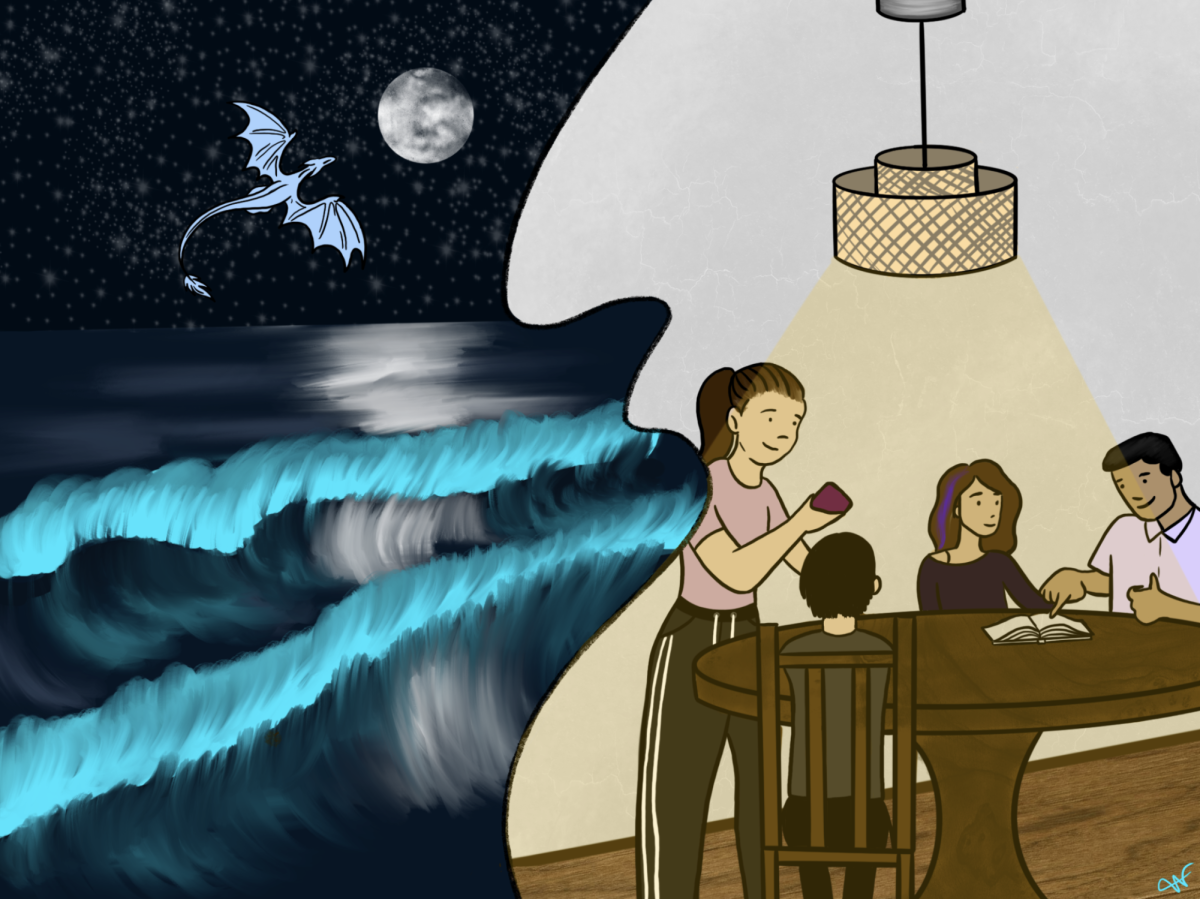
To explore this, we need to understand how nostalgia naturally occurs. First of all, nostalgia can be thought of as a trick that your memory plays on you after the original event. You don’t choose to be nostalgic – you’re instead swept off your feet into another time and place by a unique smell, an old song, or a specific time of day. At the very base of things, nostalgia is something we experience involuntarily; this is what we can call true nostalgia.
When you shift to senior year, nostalgia almost seems like an industry. From the first day of senior year, there are countdown clocks to commemorate our lasts. 182 school days until high school is done!
Even tangible things are created, with grad parties being popular choices. Think about when you attend a senior event like prom. At every event, half the room is experiencing it through their phone screen. Are we really at prom if all we’re doing is making a document that proves we were there? In our desire to capture the moment through photos and videos, we forget to actually experience the moment. Though we will have the photo ten years later, will we look at the picture and remember the actual night, or will we remember only taking the picture?
Therefore, as I reflect on how I’ve lived these moments, I wonder how much of it was genuine. How much of it was amplified or exaggerated just by the mere idea that this would be my last, or maybe even by the idea that this would be my nostalgia in the future? I’m in the moment, but that idea of the “last” makes me feel more, louder, and I make sure that it’s visible.
This isn’t to say that anyone should be labeled performative because of this. However, I do believe that we underestimate the power of the mind. That same mind, which can manifest symptoms of a fever in the body just with thought, often brings us into many contradictions. We need to be mindful and live in the moment, but similar to nostalgia, if we are hyperaware of our living, then we are no longer “living in the moment”. When I look around the cafeteria during an ordinary Wednesday lunch, burdened by a label of “last”, when I don’t get that feeling, do I hug a little longer than usual and say “I can’t believe it’s over already” because everyone is doing it too?
Sometimes, I’ve realized, you feel nothing, which is a terrifying thing in and of itself, because maybe it implies that the four years behind you haven’t summed up to anything worth feeling. So when I perform and smile a little more somber, perhaps it isn’t vanity, but panic about whether anything I did actually mattered enough for me to feel nostalgic about.
Are the feelings real, then, or have I been performing them for so long that I just can’t tell anymore?
Though the idea makes me uneasy, I’ve come to understand that it doesn’t matter. Maybe the performance, though repeated, managed to create something real. Maybe when I hug my friends for the last time, that performance is how I tell them that I wish I was feeling more.
Perhaps that is the closest I can get. And maybe I’ll only get there ten years from now, when no one is expecting my manufactured nostalgia.