





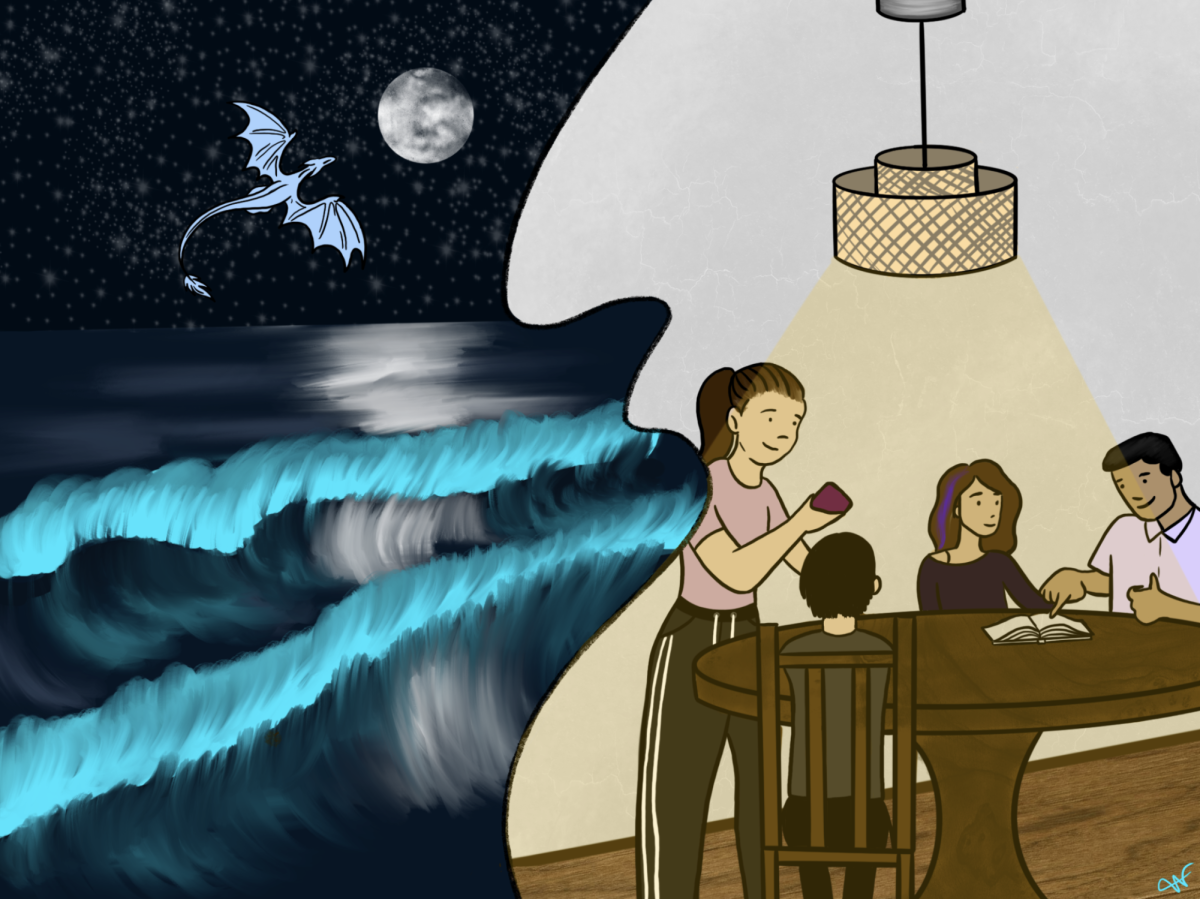
You open your eyes to a new world. Standing upon a ship, you glance down at your hands and notice the subtle, calm waves of the ocean below your palms transform into bioluminescent swells. As the sea floor blooms with a satisfying glow, you gasp in awe. This mystical play of light and dark soothes your aching soul as your murmurs blend with the gentle whispers of the wind. Your hair flows freely as you gaze across the vast expanse of hues cascading over the sea.
It sounds magical, doesn’t it?
But it all ends when you take a deep breath, slowly lift off your headset, and slump back onto your bed. The ordinary sight of your bedroom walls bores you as you reminisce about what you just experienced. That fleeting glimpse of imagination was crafted by a man-made alternate dimension: virtual reality. Virtual reality uses 3D head-mounted displays and pose tracking to provide users with an immersive experience in a virtual world. These applications allow a user to enter an artificial, completely computer-generated environment that simulates reality through goggles, headsets, or gloves.
Your calloused hands rub your face as you place your headset back on. Choosing a new reality, you’re suddenly a ferocious warrior, clad in formidable armor, riding upon a scaly maroon dragon. Heat rises from the dragon scales beneath you, its maroon skin a large contrast to the bursting fire that blooms out into the sky as its powerful wings beat the air. You lift your sword in pride, watching as your creature glides through the clouds. Wind roars in your ears, tugging at your hair and at your cape. Every subtle tilt of your wrist and every shift in your posture is affected by the specific motion sensors that pick up your movements. The illusion that you’re entering the virtual world, also known as telepresence, picks up every meticulous detail that you’re performing in the virtual world, and therefore converts it digitally. This makes it feel as though the sky and the dragon itself are answering to your every command.
On top of providing users with impeccable experiences of dragons and bioluminescent oceans, virtual reality assists with the real world. Some real-life applications for VR beyond gaming include medicine, with experiences like surgery simulations, pain management, exposure therapy for phobias, or PTSD. Virtual reality also helps with the education of the next generation through virtual field trips, science labs, and history reenactments. By providing simulations, it also trains our future pilots, firefighters, soldiers, and athletes. Architects can walk through buildings before they’re even built, ensuring stability.
Despite all these benefits, there are unfortunately some dangers to having an artificial realm. Some include escapism, desensitization to violence, unrealistic expectations of life, or self-image. For many users, these manufactured worlds can become more comforting than everyday life, almost manipulating them to retreat to virtual reality rather than face real-life responsibilities. Over time, this kind of escapism can cause damage to an individual both mentally and physically, as some are inclined to ignore their own health in favor of man-made imagination. In addition, repeated exposure to violent or hyper-intense simulations can create trauma for sensitive users, causing large mental damage. On the other hand, excessive use of virtual reality can create exposure to unrealistic standards of appearance and life, leading to dissatisfaction or even depression when reality fails to match the perfect world in VR.
After a gruelling match with a goblin in your virtual world, you hear the calls of your mother downstairs for dinner. You say goodbye to your dragon and quickly take off your headset. As you rush down the stairs, the warm linen light in your dining room welcomes you in a soft atmosphere. You immediately catch the smell of your mother’s food, the laughter of your siblings, and the excitement radiating from your father. Virtual reality is fun and all, but here, you realize that no artificial world can match the reality of family, love, and life.
The dragon will disappear with a click of a button, the goblin will respawn as many times as you like, and the glowing oceans will always be loading behind a screen, but your father’s laugh, your mother’s smile as she sets the table, and your siblings bickering over the last slice are all moments that can’t be resisted. As you sit down and join them, you notice the slight imperfections in the room. The slightly chipped plates, the out-of-place family portraits, and scratches on the dining table make you realize something: nothing is perfect. No conversation is scripted, no food is pixel-perfect; it is all happening in real time. Virtual reality can give you an imaginative light that the real world cannot offer, but it’s the messy beauty of real life that gives you something worth coming back to.