






Just a couple of years ago, celebrities seemed untouchable. A large gap separated celebrities and normal people, with stars wearing oddly large hats and mile long dresses that the ordinary person would never have access to. The difference between celebrities and normal people lay in outfits, mannerisms, and lifestyle choices; the private life of a celebrity remained an illusive mystery. The public regarded celebrities as modern-day royalty.
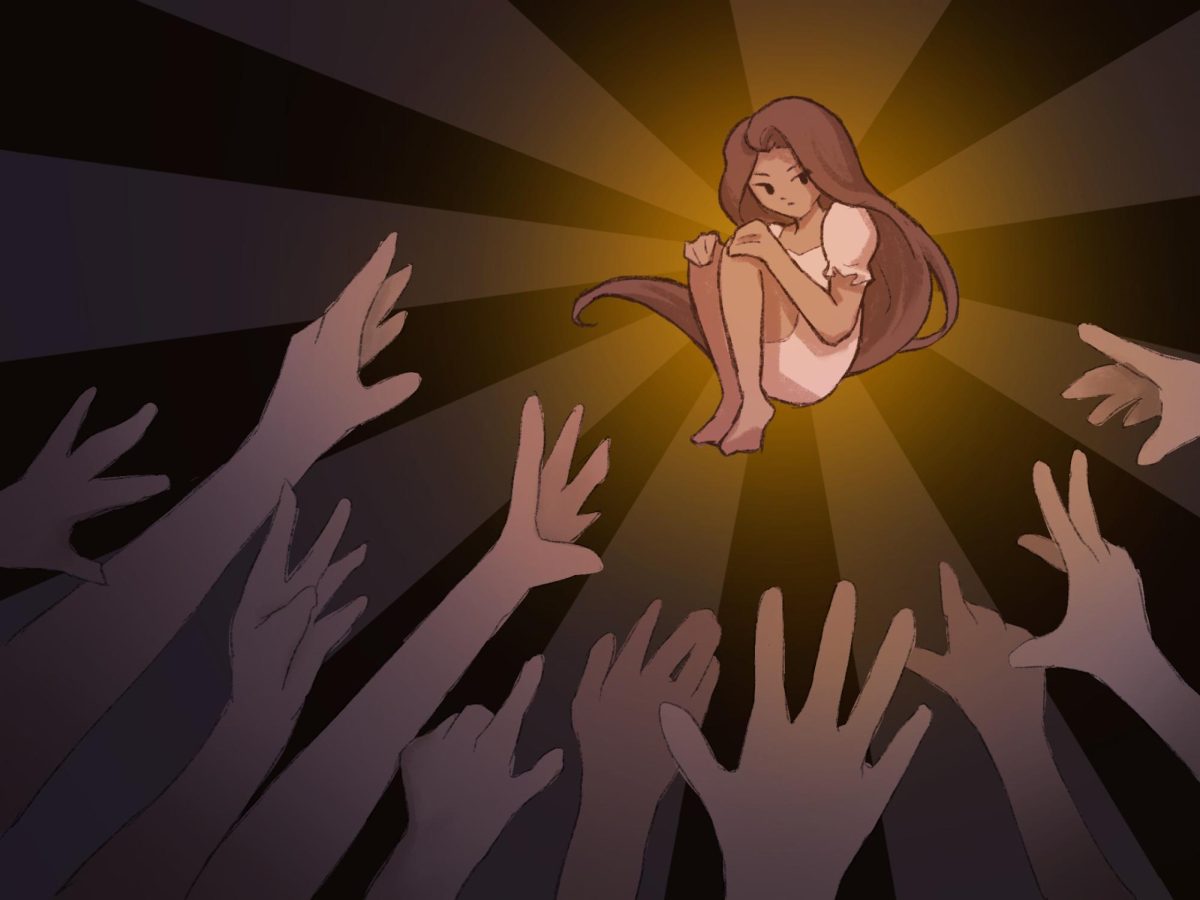
Recently, however, we began to see celebrities as peers, which led to the rise of parasocial relationships. Instead of viewing exclusive events from the lens of a paparazzi camera, we can see the life of a celebrity from livestreams or posts on our phones. With advanced technology and social media, the fourth wall becomes broken and we can see carefully curated pieces of a public figure’s life through the form of “Get Ready with Me” and “What I Eat in a Day” videos. Celebrities use short form content to become relatable to the general public. Yet, the switch between untouchable idols to moments of calculated vulnerability is transformative. Fans feel more connected than ever, but also more entitled to the star’s private reality.
The mechanism behind producing these eager fans lies in “stan culture.” To “stan” someone is to be an all-consuming and intensely enthusiastic fan of theirs, and it’s the first step to parasocial relationships. Stan culture has gained momentum throughout the years, as people feel a shared sense of community when idolizing a celebrity figure. Stanning can become unhealthy very quickly, and the obsessive culture from both fanbases and paparazzi blurs the line between support and devotion. The scary part is how erosion of boundaries is now treated as a social norm, when thousands of fans online are collectively analyzing a star’s every move. Fans know the favorite breakfast or the morning routine of their ideal public figure, and feel entitled to more private information. The line between fan and friend is now broken, and a celebrity’s personal details are treated as public property.
The appeal of celebrities varies from fan to fan; however, the main attraction is a sense of belonging. Celebrities provide inspiration and emotional connection to fans, but most importantly, they offer stability. While friends in the real world can abandon or have arguments with you, influencers maintain a stable online presence. Whether it be through going on live at the same time every Friday or releasing albums every year, celebrities are predictable. The relationship is low risk for fans because parasocial relationships don’t end in messy break-ups or rejection. The celebrity is a constant source of joy. Being a fan of a celebrity introduces you into a welcoming fan base, where you join a community of people. These people share the same interests as you, and give you a shared identity, reducing loneliness.
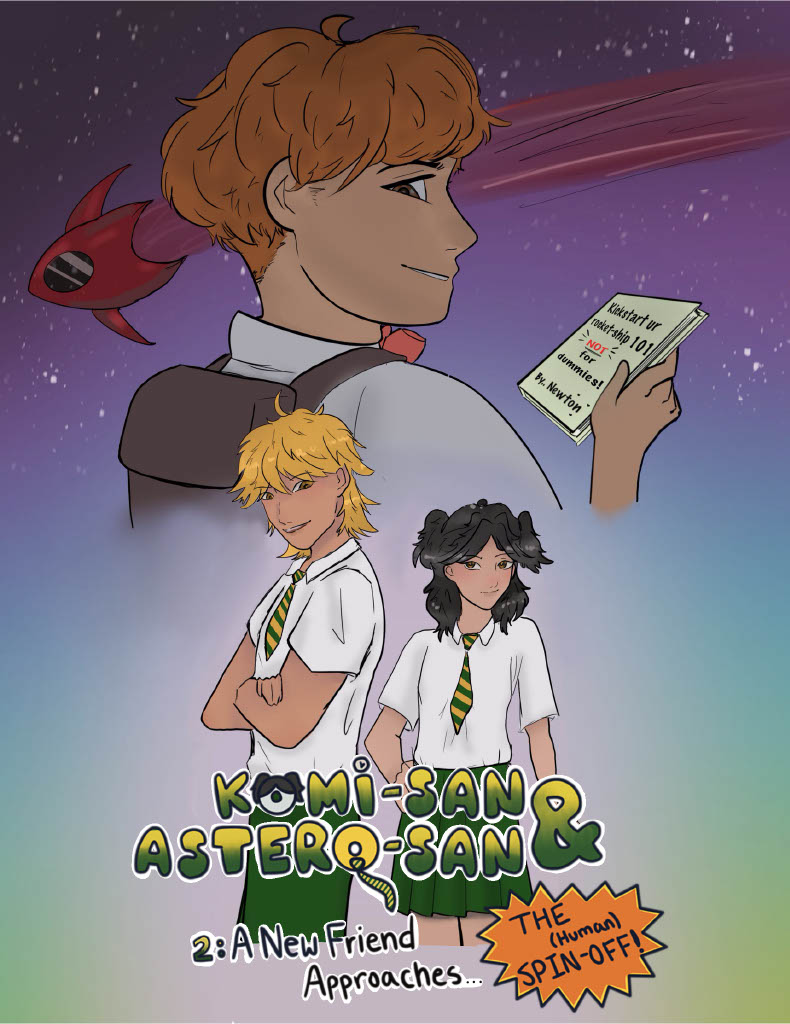
Parasocial relationships aren’t limited to real-life people; they can apply to fictional characters, artificial intelligence, or any entity unaware of the fan’s existence. Our brains aren’t wired to distinguish the difference between physical presence and digital simulations. Humans are evolutionarily equipped to filter out fiction: we get attached to emotion. The situation worsens when AI is introduced. Artificial intelligence responds directly to you, so our brains naturally think there is an entity behind the voice. The most painful part of parasocial relationships is the realization that these entities don’t actually know of your existence and cannot reciprocate emotions like a human. Fictional characters and AI algorithms don’t have feelings, and although their interactions seem meaningful, they aren’t.
Parasocial relationships can easily spiral out of control, but in early and calmer stages it can benefit fans. Fans often use celebrities or characters as a template of who they want to become. By using figures as an inspiration, you can better yourself more easily than without a blueprint. Celebrities can also act as a temporary buffer for loneliness. Joining a live, or scrolling through an influencer’s videos is the closest you can get to human contact when no one is available, and it lowers stress and is comforting for a fan. A fandom or fanbase is also a positive for a fan. A sense of community is comforting, because humans like when others are in the same boat as them. A lot of positives can come from following an influential person. It only becomes harmful when the fan crosses the line from inspiration to obsession.
Although, parasocial relationships aren’t inherently unhealthy for both parties, and are in fact a natural response to a society that offers unfiltered access to a figure’s private life, it’s easy for things to go south with an influencer, fictional character, or AI chat when the fan forgets the relationship is one sided. A fan can achieve a sense of community and inspiration from a celebrity, but a respectful distance is required in the relationship. Distant relationships with a star can be extremely meaningful for people to experience, and parasocial relationships are just a byproduct of a society where people can share everything online.