










Despite constant accomplishments, little wins, and more opportunities for the future, we seem to get happier with each achievement.
We hope that with each positive change our lives would significantly improve, but it rarely works that way. Take your phone for example. A useful device with activities ranging from researching topics to doomscrolling for hours. Now think of a newer model that has an improved camera, enhanced customization, and smooth designs. If you bought that phone, it would start to lose its excitement the moment a new model is announced. You have a perfectly good phone, so why did the satisfaction fade? This emotional reset seems inevitable, repeating after every big event. Could this just be human nature, or is this cycle necessary to keep society functioning?
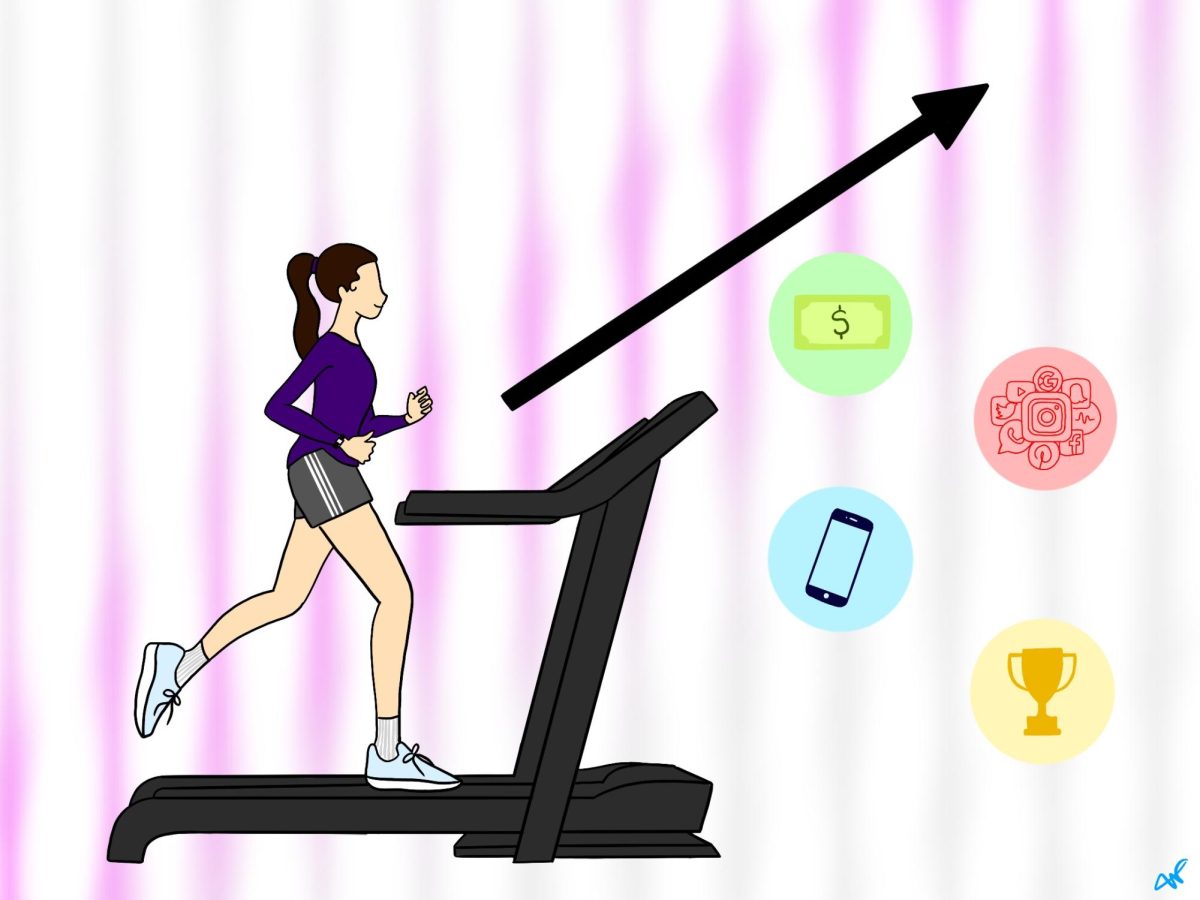
The hedonic treadmill is a psychological concept that explains how people return to the baseline level of happiness despite major positive or negative events. Almost like putting in effort to run on a treadmill, only to stay in the same spot. In this concept, there are two main ideas: the hedonic adaptation and the happiness set point. The hedonic adaptation is the process where we adjust to new experiences until they become normal. The happiness set point is the baseline level of happiness we naturally reset to. The treadmill spirals into a cycle, chasing after the next “big thing” because the last one wasn’t enough. An endless cycle of always wanting more.
The hedonic treadmill isn’t a new concept, as humans developed this tendency in order to survive. If our ancestors were satisfied after one meal, they would stop seeking food. If our ancestors stayed discouraged after a failed hunt, they wouldn’t have kept trying. Evolution prioritizes survival not lasting happiness, so this emotional reset adaptation keeps us alert, motivated and functional.
Academic or career goals, material possessions, and social and extracurricular achievements can be a quick boost of happiness in students’ lives, but the hedonic treadmill shows up far beyond school. The consumer economy is a system entirely dependent on constant buying. This economy thrives off of products that are meant to be outdated faster, trends and social media pressures, and exceptional marketing. Customers keep chasing quick bursts of satisfaction and businesses keep generating more problems that their products “solve”. The hedonic treadmill tends to keep fueling the economy which is based on consumption.
The hedonic treadmill concept builds resilience, regulates emotions, and motivates growth, but in a society of chronic dissatisfaction and burnout, the emotional reset is hard to enjoy. The hedonic treadmill worsens mental health and leads to a cycle of always wanting and never being satisfied. It makes genuine joy rare, because you can always be “happier”, more “successful”, or somehow “better” than you are. The hedonic treadmill is a suffocating loop, but truthfully, the treadmill is hard to get rid of. It’s biological, profitable, and reinforced on a daily basis by social media. The problem isn’t in this endless cycle, but the unsustainable rate society accelerates to.
Understanding the hedonic treadmill, doesn’t mean we can escape it, but it allows us to enjoy life instead of constantly chasing after our goals. When we recognize the constant simulation and consumerism, we can create a healthier relationship with happiness. The hedonic treadmill isn’t a flaw in humans, but it became a tool our society has weaponized.


ANANT CHAUDHARI • Feb 2, 2026 at 11:37 pm
nicely articulated Swara. Good job, keep it up!