





Dance has been known to have played a role in a diverse number of cultures for about 10,000 years in our world. It is a way to convey emotions, messages, ideas, and moods that words may not be able to express as potently. It is ingrained in our culture, whether one enjoys partaking in it or just witnessing its effects. The topic of dance can arise significant debates in the world: Is it a form of art or a sport? To put into perspective, even dancers who spend every minute of their lives working on their ability to dance argue with each other on what category the activity falls into.
The majority of dancers spend more than ten to twenty hours a week on dancing and improving their works and skills. They work multiple muscle groups from biceps to abdominals to hamstrings, and even more. They work out the tiniest muscles in their body, like the intrinsic foot muscles all so that they can maintain their balance for a second longer. They need ab workouts to turn more, arm workouts for acrobatic tricks, and leg workouts to stay on pointe. Even recreational dance like Zumba allows people to lose calories because it invariably forces them to use their body as a tool. Most importantly, competitive dancers participate in competitions every week or every month, compelling them to work as hard or even harder than those who may play varsity soccer or volleyball. These are just some of the vital reasons that people may argue that dance is a sport. By definition, a sport is an activity involving physical exertion and skill in which an individual or team competes against another or others for entertainment. Per this definition, dance is definitely a sport, but there is more that keeps people on the opposing side of this argument.
Dance—before it was a competitive sport—was an outlet for people to express themselves, send messages without needing to speak or using their voices. It was inherently a form of art, as it was seen as a language spoken by all. Dance was always seen as a way to connect people in their community, even when there seemed to be a divide in opinions and beliefs. The Samba, rooted in Brazil, the Square Dance in America, the Gumboot Dance from Africa, the Odissi from India, and numerous more are traditional dances that signify the morals of different cultures. Ballet shows at the American Ballet Theatre, such as The Nutcracker, Giselle, and Swan Lake, are dances choreographed to show the stories of life, and they bring fictional thoughts to real life, showing real emotions. All of these forms of artistic expression are from the roots of performance not from the roots of competition or cultivated hatred in a community.
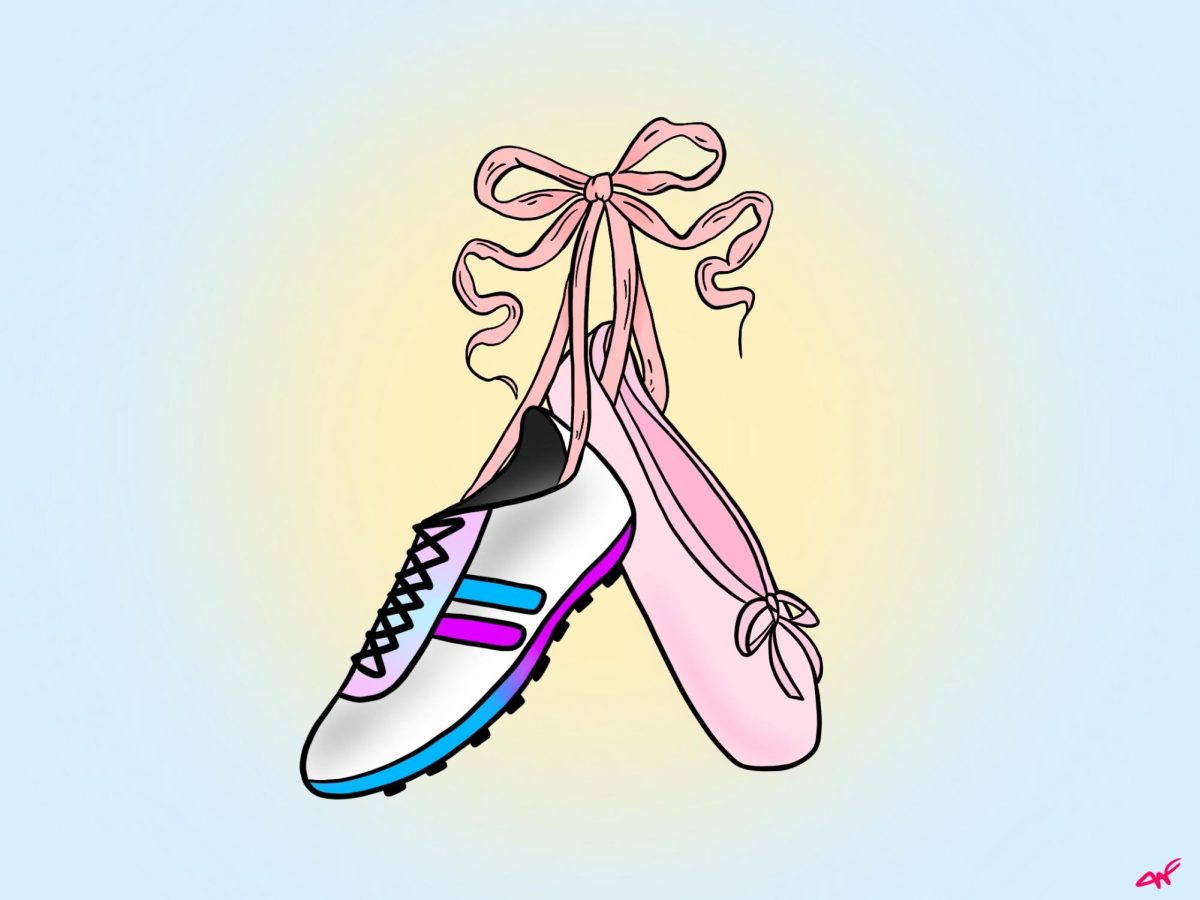
Both sides make great arguments, but what most of society forgets is that there does not need to be one singular “correct” answer for anything. Dance lives in between the characteristics of a sport and an art form. This versatility is what makes it the amazing enterprise that it is. To reframe this, many people have to choose between being able to participate in the school musical or trying out for the soccer team. If someone truly loves to dance, they wouldn’t have to choose at all because they would be getting the benefits of both a sport and the joy of performing. Dance allows people to achieve different fitness and strengthening goals while enjoying the beauty of performative work.