








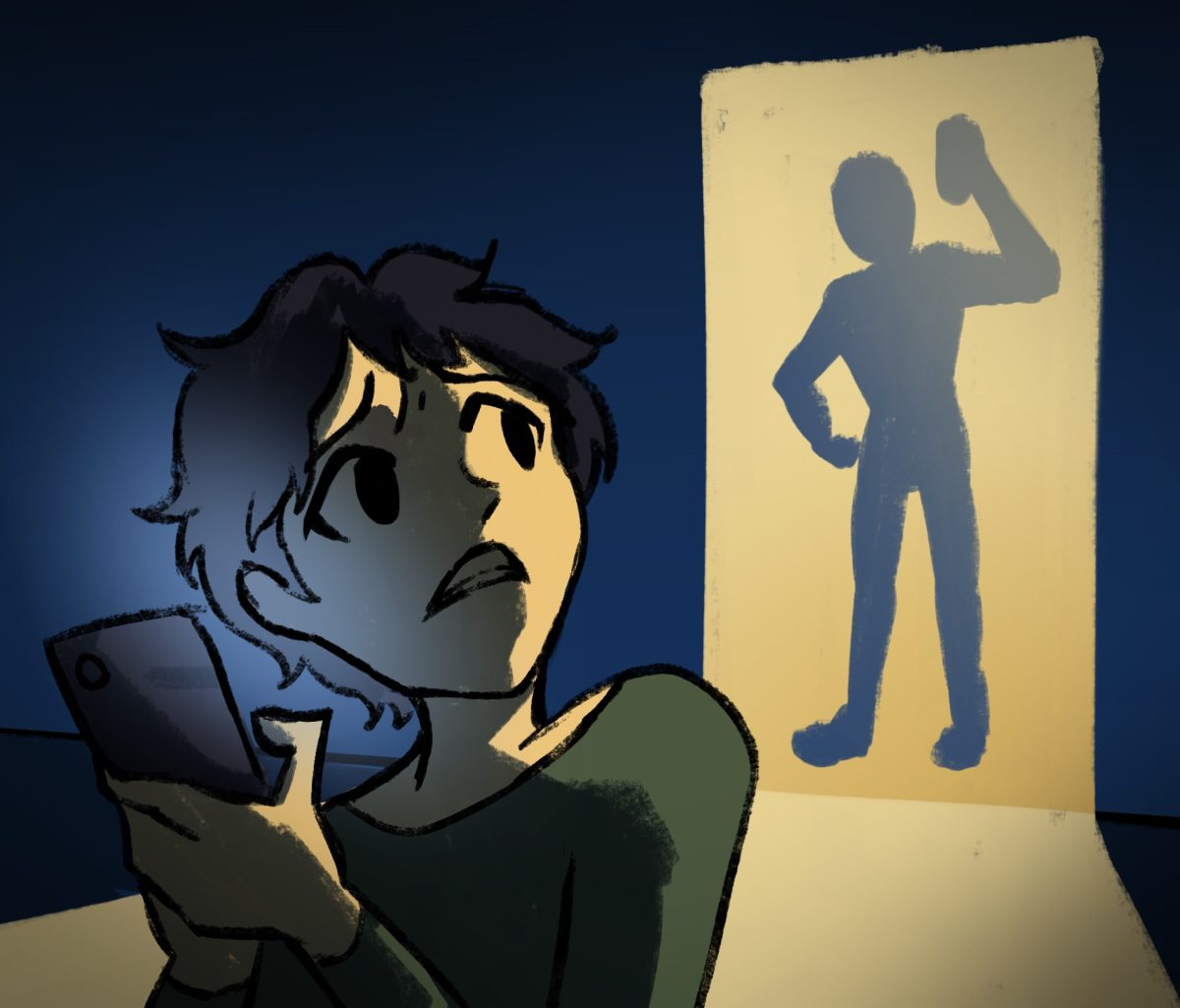
Mental well-being is like a fire. It should never be ignored, taken lightly, or tampered with. Most importantly, it needs to be addressed as soon as a problem arises. Unfortunately, many minors around the world are not able to extinguish such a fire due to one grand barrier: their parents. Whether it be traditional and conservative values or simply disbelief, many parental figures often undermine their children’s mental status. As a result, those children are unable to seek adequate help and are left to navigate a dangerous predicament all alone. Clearly, the requirement in most areas for parental consent before providing a minor with psychological services must be reconsidered: help should be for everyone, regardless of their age.
The lack of proper recognition of mental struggles in minors is at an alarmingly high rate, so much so that the National Library of Medicine states, “High rates of mental health conditions (predominantly anxiety and depression), coupled with concerns regarding access to appropriate treatment, have led scholars and national healthcare organizations to declare a ‘state of emergency’ pertaining to child and adolescent mental health”. This state of emergency has a direct correlation to guardian negligence. The presence of “concerns regarding access to appropriate treatment” reveals the actuality of many parental figures neglecting their children and ignoring their struggles rather than aiding the situation by getting help. Such parental ignorance can stem from multiple causes; for instance, many people simply do not understand the severity of what unstable mental health can mean for the average man’s lifestyle. Others simply do not have value for it in their traditions and culture; of course, neglect and child maltreatment are undeniably present as well. In fact, on top of this, parents can also be the cause of psychological issues in children. As UNICEF.org states, “Nearly 400 million children under 5 — or 6 in 10 children within that age group globally — regularly endure psychological aggression or physical punishment at home, according to new UNICEF estimates. Of them, around 330 million are punished by physical means.” In such abusive situations, parental consent to receive mental help is completely out of the question. These children thus feel even more isolated and hopeless, leading to worsening problems. It is visible that parents are, regardless of intention, a significant barrier to children struggling psychologically.
To solve this growing global issue, minors must be given a degree of control over the services they are able to receive. According to the Feinberg School of Medicine’s News Center, “Adolescents who lived in a state requiring parental consent were less likely to receive treatment…” This statistic reveals the dire necessity for minors to be able to make their own decisions; they must be able to put out their own fire. Accessing psychological services such as crisis intervention and therapy without parental consent would enable minors to increase productivity, take charge of their futures, and harness their potential without feeling isolated, alone, or misunderstood. Above all, this privilege would address immediate emergencies and prevent minors from taking drastic actions that may destroy their future. Minors above the age of thirteen years old are often capable of deciding that they need help and seeking it on their own; parental consent in such situations, more often than not, simply proves to be an unconquerable obstacle. Indeed, levels of maturity do vary based on the individual – regardless, the majority of adolescents are much more adept at taking their own decisions than expected. Allowing minors to receive psychological services without mandatory parental consent would also provide them with the highest possible degree of privacy and trust, giving many a feeling of security and safety they may not have received before this experience. Overall, bestowing minors – especially teens above the age of 13 – with the boon of receiving all of the mental health care they require, without adult approval, has countless benefits: improved self-esteem, confidence and productivity, as well as a control for curbing the amount of emergencies stemming from mental health issues… and even a feeling of safety and trust for those who have never felt it before in their homes.
At the same time, discrepancies in the plausibility of providing aid to minors without a wiser viewpoint are not completely invalid. Yes, it would mean that a minor would have to take on financial responsibility and burden for their own care. However, there are ways to work around financial obstacles. Countless youth nonprofit organizations exist to support a child in similar situations, as well as low-cost clinics that may adjust pricing based on income. Furthermore, other family and friends may be able to contribute. Cost in such scenarios is undoubtedly an issue, but surely one that can be solved. Clearly, there are “workarounds” to these minor considerations. Another valid concern about minors accessing psychological services without proper oversight is maturity; a lack of maturity and acuity can undoubtedly lead to problems. To address this, age limits can be set. For example, minors from ages 13-15 should only be allowed short-term counseling due to the stage of development they’re in. Limits such as these would ensure that children are getting the help they need, even if it is limited for the time being.
Given all these points and evidence, it is crucial that minors be allowed access to psychological services without parental consent. No child should be left in the blazing conflagration of their own mind; no child should be dependent on their parents to put out a fire that may very well have been caused by the “mature figures” in their lives. Some parents simply do not understand their child’s mental status – worse, some don’t care or believe that there’s a problem at all. In other situations, the child may be scared to disclose their situation to their parents or guardians due to a myriad of reasons. Regardless, everyone deserves help. Everyone deserves the power to take control of their problem and work on solving it. Mental health care is not a privilege… it is a right.